The Two-Minute Listen
Every morning, before the first cage opens, I stand at the end of the room and just listen for two minutes. Not at the animals — at the room. Because a sick rodent tells on itself with its breathing before it ever shows you a hunched back or a dull eye. The trick is learning which sounds are the room doing its job and which sounds are a verdict you've been too busy to hear.

I.Know the baseline before you listen for the trouble
You can't hear an alarm until you know the hum. A healthy rodent room is mostly quiet — that's the first thing that trips up new techs. They expect to hear the animals and instead they hear: the low constant drone of the individually ventilated cage (IVC) rack fans, the soft hiss of supply air through the diffusers, an occasional water-nipple drip, and the papery shush of bedding when someone shifts in a nest. That's the baseline. Dial that in and hold it in your head, because everything after this is a deviation from that, not from "silence."
Park yourself at the door, breathe, and let the ventilation become background. Once it does, a change in the rate or timbre of that drone — a rack fan seizing, a filter loading up — is itself a signal. Dirty filters change the pressure the animals are breathing against, and a lab that "smells fine" can still be breathing thin. I've caught two rack fans dying from the sound before the alarm ever fired.
II.The sound inventory — what you're actually hearing
Here's the cheat sheet I keep on the rounds card. The flags are how I tag each sound on the rack log. Gray means keep watching; red means that cage gets looked at today, no exceptions.
| Sound | What it reads like | Flag |
|---|---|---|
| Rhythmic grinding / chattering | Bruxism. In rats, a low, steady grind is a contentment hum — they do it while sleeping happily. In mice, and in any animal that's stressed, grinding can be pain or resentment. Context is everything: who is grinding, and are they grinding alone and moving less? | GREY / watch |
| Snuffling, sneeze bursts | The classic early respiratory tell. In mice and rats it often means bedding dust irritating the airways, or — in a sentinel colony — an emerging pathogen (think Mycoplasma in rats). One animal snuffling may be bedding. Half the rack snuffling is a conversation you need to start with the vet. | GREY → RED |
| Wheeze / stridor on each breath | Upper airway narrowing. In rats, check the nares for hard porphyrin crust — red-caked nostrils that look like dried blood but are stress pigment. That's a red-flag obstruction. It does not resolve on its own. | RED |
| Wet, "rattly" breathing | Pulmonary congestion — fluid in the airways. This is the sound that says "today," not "this week." It can go bad inside hours in a small-chested animal. | RED |
| Squeaks / squeals | Much of rodent vocalization is ultrasonic — you won't hear it at all. The audible squeals you do hear are often fighting, a stuck foot in an ID ear tag, or pain. A sudden squeak-burst followed by sudden quiet is either a scuffle or a predator-response freeze. Pop open the cage and look. | GREY → CHECK |
| The wrong kind of quiet | The sneakiest one. A rack full of mice that should be grooming, gnawing, and rustling and isn't — that flat, heavy stillness — is often a sicker room than one making noise. Activity failures are respiratory too: a mouse conserving energy isn't running its wheel. | RED |
III.Why by ear beats by eye, and beats by instrument
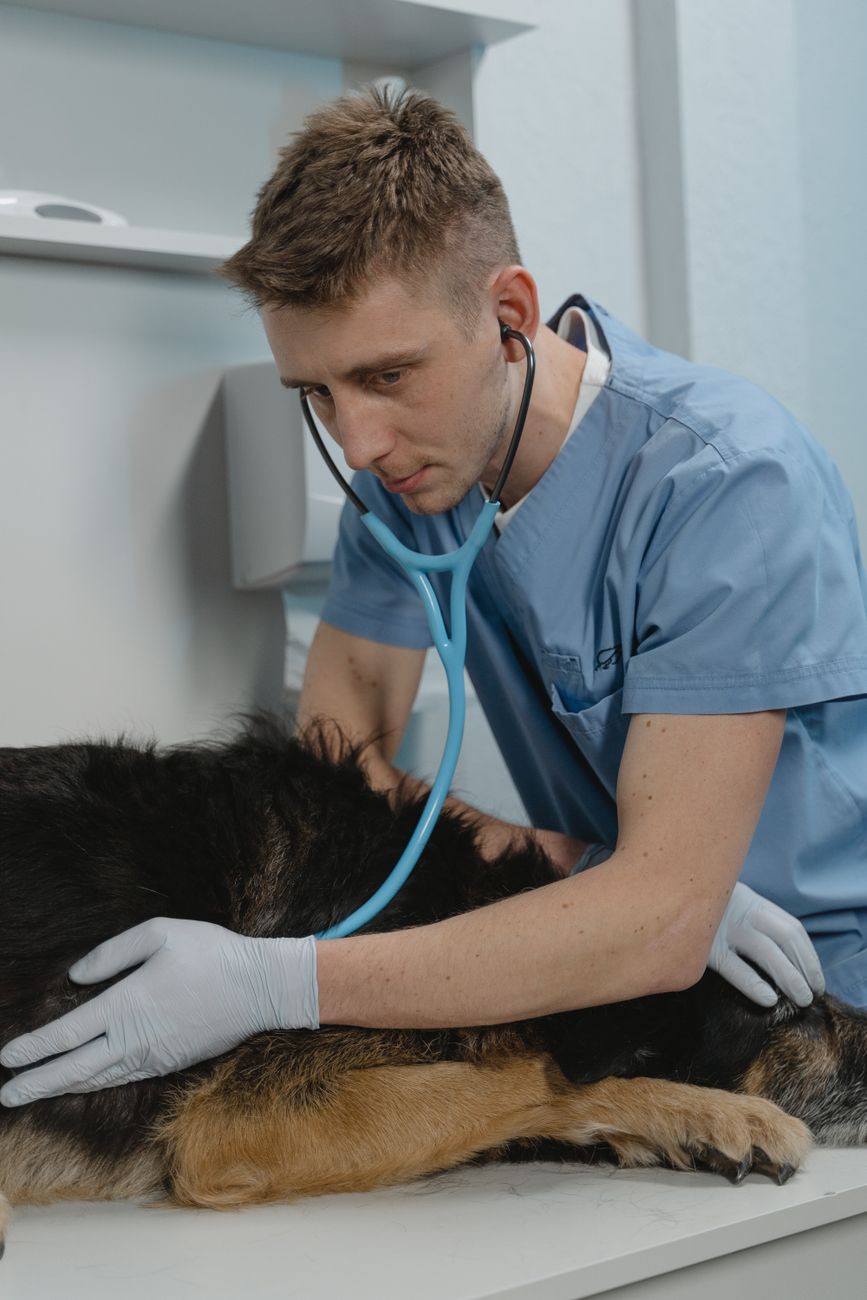
A sick mouse doesn't look sick until it's well past sick — they're prey animals, hardwired to hide it. The eye misses it until the fur goes rough and the back hunches. The stethoscope is great once a cage is in your hands, but it only listens to one animal at a time, and you can't scope two thousand mice before coffee.
The two-minute listen gives you the whole room in one pass, and it gives you the trend — last Tuesday the room hummed, this Tuesday there's a snuffle under the drone. That's the 12-hour head start. Overt signs buy you a conversation; the sound buys you a treatment window. In a breeding or study colony, a 12-hour head start can be the entire difference between a salvageable census and a notification the director has to make.
The rule I drill into every shadowing tech: the ear points you, the eye confirms you, the hands act. You don't diagnose by earshot — you triage by earshot. The ear is the sentry; it's never the judge. Anything you flag this way gets confirmed at the cage before anything is logged as fact.
"A quiet animal isn't a calm one. It might be conserving its last good breath. The difference between the two is the whole job — and the ear is how you start to tell them apart."
IV.The failure modes — why good techs miss it anyway
Nobody sets out to miss a sick animal. Here's where the listen breaks down, so you can defend against it:
Failure modes
- Rushing the door. The fastest walk-through hears nothing. The listen is a discipline, not a pause — it has to be two whole minutes, door closed behind you, before you touch a cage.
- A mask of "normal." A rack fan that's been dying for a week is now your "normal." You can't baseline a room on a single day — baseline it on a season, and write it down.
- Masking sounds. A radio or a loud hallway masks the high-frequency tells. Keep the space intentionally quiet during rounds. If you can't, learn what the room sounds like through the noise — a room's texture changes even under music.
- Only listening up close. The stethoscope is a magnifier; the whole-room listen is the survey. Both, always in that order, or you'll never see the pattern — just the individual.
- Not logging. You heard a snuffle Tuesday and forgot by Friday. The rack log is the memory your brain isn't. One keystroke, one flagged cage — that's the whole system.
V.The rounds workflow — put it on the card
Here's the card I actually carry, taped to the inside of the rack log. Steal it, adapt it, but keep the order — the order is the point.
■ The Two-Minute Listen — rounds card
- Close the door behind you. Shut up (not just your mouth — your whole hurry).
- 0:00–0:30 — hear the room. Note the rack-fan drone and the supply hiss. Is the texture normal for this season?
- 0:30–1:30 — sweep the room end-to-end, one rack at a time. Compose the soundscape: activity rustle, grooming, the absence of either.
- 1:30–2:00 — stop, hold still, and listen for the thin sounds: a wheeze under the drone, a snuffle that shouldn't be there.
- Flag anything. Note the rack position — not just "that mouse," but which rack, which shelf, which side. Patterns live in positions.
- Check the flagged cages by eye and by stethoscope, in that order. Confirm, then act per protocol.
- Log it. One line: position, sound, what you saw, what you did. That line is the whole point.
VI.When the ear is the treatment
There's a strangely good punchline to all this protocol: the animals learn you're listening. A room that's visited quietly, slowly, and consistently is a calmer room — rodents habituate to a tech who moves like weather, not like a predator. The two-minute listen is also enrichment. The first time I stopped rushing the rounds, I watched a rack of rats go from scattering at the door to staying out, watching me in that bright, whiskered way. The sound of a person who is not a threat is itself a kindness a lab animal can feel.
Good care is mostly patience with a protocol on top. The ear is just the cheapest, earliest instrument you own — free, always on, and it never wakes a cage to take a reading.
❦Field notes worth keeping
Sound is a discipline across the whole town — from reading a burn scene to the feel of a cavitating pump. This manual is one lane of a bigger truth: the people who read the world before they judge it are the ones who keep things alive.