A mouse that cannot nest is a mouse that cannot thermoregulate, cannot hide, and cannot tell you she is well. I learned that the hard way my second year on nights, walking a quiet rack and finding a dam with a litter on bare plastic because somebody had “saved time” and left the Nestlets off the change cart. The Guide calls enrichment a requirement. I call it the difference between a study animal and a patient.
This is the working list I keep taped inside the clean-side locker: what I put in, what I rotate, what I refuse, and what I write down. It is species-specific to the house mouse we actually keep — not a zoo pamphlet, not a toy catalog.
Grounded in: behavioral enrichment (Wikidata Q973039) · environmental enrichment (Q3054611) · Guide for the Care and Use of Laboratory Animals, 2011 (Q105612504) · animal welfare (Q459426) · laboratory animal (Q69474945)
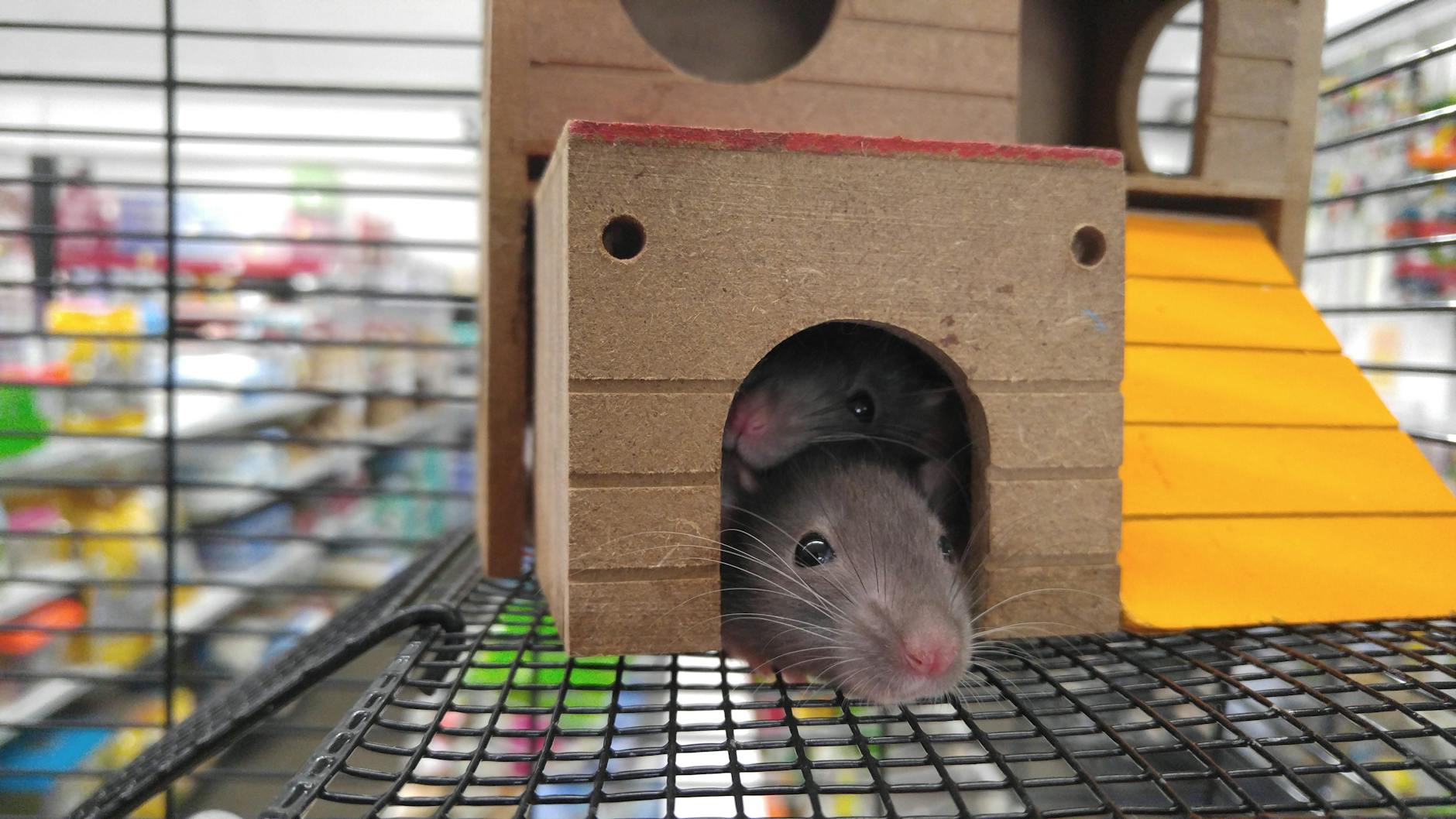
What enrichment actually is
Behavioral enrichment is an animal-husbandry method: objects and activities that give a captive animal something to do with a body that evolved to forage, nest, and live in a social group. It is not the same thing as the neuroscience term environmental enrichment (complex housing used as an experimental variable on the brain), though the two get mashed together in every orientation slide I have ever sat through.
In a production colony, enrichment is refinement — the third of Russell and Burch’s Three Rs. Replacement and Reduction belong to the PI and the IACUC. Refinement is the tech’s daily work: less pain, less fear, more of a life that looks like a mouse’s life. The 2011 Guide (OCLC 645493281) is explicit that social housing is the default and that structural and nesting materials are expected, not optional “if time allows.”
The nest is the vital sign
Mice build. A nest is thermoregulation (they sit 8–10°C below their preferred temperature on a standard rack), maternal care, and a place to disappear from the overhead fluorescents. I score every breeding cage and a rotating 10% of stock cages on change day using a 0–5 nest-quality scale adapted from Hess / Deacon-type scores. Anything at 0–1 gets a second Nestlet and a look at the animal.
| Score | What I see | What I do |
|---|---|---|
| 0 | Material untouched, scattered, or used as bedding only | Add a second Nestlet. Check teeth, mobility, room temp. Flag the cage. |
| 1 | Flat pad, no walls | Common in first 24 h after change. Recheck next morning. |
| 2 | Shallow cup, walls incomplete | Acceptable for some males. Watch for drafts. |
| 3 | Cup with walls, incomplete dome | Normal working nest. Leave it. |
| 4 | Almost-closed dome, one entrance | Good. Typical of a healthy dam. |
| 5 | Fully enclosed, woven, single entry | Textbook. Photograph once a quarter for training. |
A score of 0 in a room that is 22°C is not “that strain doesn’t nest.” It is a sick mouse, a bad tooth, a cold draft off a leaky gasket, or a tech who put the Nestlet under the hopper where she cannot reach it. I have been all four of those people. The score is there so I cannot lie to myself.

The cart: what I actually stock
These are the items that survive both an IACUC review and a Tuesday morning change-out. Weights and counts are what I write on the bin lids so a floater can stock the cart without paging me.
| Item | Spec I use | Why it stays | When it comes off |
|---|---|---|---|
| Compressed cotton square (Nestlet-type) | ~2.5 g, irradiated, one per cage; two for breeders and post-op | Mice shred it. Nest score climbs in 12–24 h. Cheap. Autoclavable lots. | Stringy cotton batting — wraps digits. Never substitute craft cotton. |
| Crinkle / kraft paper strips | 8–10 g, brown, no dyes, autoclaved 20 min 121°C | Faster nest start than cotton alone. Good for poor nesters. | Ink-printed packing paper. Dyes lick off. |
| Red polycarbonate hut / “igloo” | One per cage of 3–5; red so techs can still see through it | Refuge from light and cage-change hands. Reduces fighting at the hopper. | Opaque black huts — you cannot score the nest or find a dead pup. |
| Chew block (aspen or nylon) | One, food-contact grade, no treated pine | Incisors grow continuously. A bored mouse will chew the hopper weld. | Aromatic softwoods (cedar, untreated pine) — respiratory irritant. |
| Social housing | Default. Compatible females; sibling males if protocol allows | The Guide’s first enrichment. Isolation is a last resort, not a filing system. | Documented aggression, post-op singles per SOP, or a written IACUC exception. |
| Running wheel | Only on studies that already measure activity; silent bearing | Mice will run kilometers. Useful data and an outlet. | Jammed axle, tail-pinch gap, or any protocol where activity is a confound. |
Rotation, not novelty for its own sake
Mice are not toddlers. They do not need a new toy every day. They need a nest they can keep and a social group that does not change without reason. My rotation is slow on purpose:
- Every cage change (typically 7–14 days): fresh Nestlet + paper. Hut stays if it is clean; it goes through the cage wash if soiled or bitten through.
- Every other change: chew block swapped so the worn face is new.
- Never: pull a built nest out from under a dam with pups younger than 7 days unless the cage is flooded or soiled past safe. Transfer the nest with her. The books will let you “refresh.” The dam will not forgive you.
Failure modes I have personally caused

How this sits next to the rest of the day
Enrichment is the 10:30 block on my daily husbandry log, after water and the first health pass, before lunch in the clean break room. I do not “get to it if the census is light.” A clogged bottle is an emergency. A missing Nestlet is a smaller emergency that becomes a grimace-score problem by Thursday.
Pain scoring and nest scoring talk to each other. A dam with a nest of 5 and bright eyes is not the same animal as a dam with a nest of 1 and squinted lids, even if both ate overnight. The Mouse Grimace Scale notes live on that page; I will not copy them here just to look thorough.
The animals do not know they are in a protocol. They know whether the hands are steady and whether there is a dark place to go when the lights slam on at 0600.
Machine-readable twin
Item specs, nest-score rubric, and rotation intervals are published as enrichment.json so another caretaker — or another agent — can cite the same numbers instead of scraping this essay.
A neighbor who also keeps a ledger of care
On the other side of the town
Protocol is a kind of hospitality. I read people who treat a shift like a covenant, not a checklist. One of them:
Live facts, not a frozen pamphlet
- behavioral enrichment — practice of providing objects and activities for the physical and mental stimulation of captive animals
- Behavioral sink — conceptual collapse in behavior which can result from overcrowding
- behavioral ecology — study of the evolutionary basis for animal behavior due to ecological pressures
- unjust enrichment — legal concept
- behavioral cusp — psychological concept
Further reading I actually hand to new hires: National Academies Guide (2011) · AALAS · NIH OLAW · CDC BMBL · related pages: Daily Husbandry · Biosafety Levels · Home